
Nakamichi MS-01

Designing a speaker inspired by Nakamichi's iconic identity

Nakamichi MS-01

Designing a speaker inspired by Nakamichi's iconic identity

2025


Lund University School of Industrial Design

Individual Project

4 Weeks

2025


Lund University School of Industrial Design

Individual Project

4 Weeks

This case study examines the iconic audio company Nakamichi and its famous 1970s - 1990s brand identity, using a mini speaker as a medium for exploration. Nakamichi was founded in 1948 by Etsuro Nakamichi and was later joined by his brother Niro. Through the 1970s to the 1990s, Nakamichi became famous for high-end audio products focused mainly on cassettes and CDs, creating icons that are still cherished among "audiophiles" today, such as the Nakamichi Dragon and the RX-505.

This case study examines the iconic audio company Nakamichi and its famous 1970s - 1990s brand identity, using a mini speaker as a medium for exploration. Nakamichi was founded in 1948 by Etsuro Nakamichi and was later joined by his brother Niro. Through the 1970s to the 1990s, Nakamichi became famous for high-end audio products focused mainly on cassettes and CDs, creating icons that are still cherished among "audiophiles" today, such as the Nakamichi Dragon and the RX-505.

See the process.

Motivation

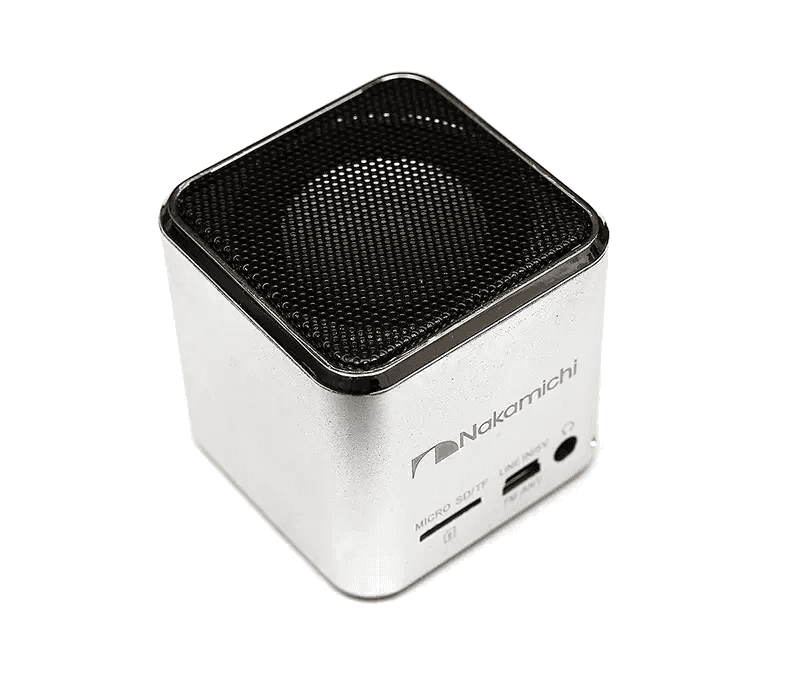
The Nakamichi Mini Plus was my first real encounter with a truly delightful audio experience. Around Düsseldorf, many students began carrying this compact speaker, and my friend and I were among them. We shared music easily via Bluetooth and carried the speaker in our pockets. Asking someone to share a song became a simple way to show appreciation for their taste. That shared experience stayed with me and became the inspiration for this project.

Brief

Develop a new interpretation of the Nakamichi Mini Plus that is embracing the possibilities of current technology, recreates the user experience and feeling that I felt when I was small and to carry Nakamichi’s values and brand identity.

See the process.

Motivation

The Nakamichi Mini Plus was my first real encounter with a truly delightful audio experience. Around Düsseldorf, many students began carrying this compact speaker, and my friend and I were among them. We shared music easily via Bluetooth and carried the speaker in our pockets. Asking someone to share a song became a simple way to show appreciation for their taste. That shared experience stayed with me and became the inspiration for this project.

Brief

Develop a new interpretation of the Nakamichi Mini Plus that is embracing the possibilities of current technology, recreates the user experience and feeling that I felt when I was small and to carry Nakamichi’s values and brand identity.

Nakamichi's History

An integral part to Nakamichi and its development within their brand identity is their history. In order to understand how they changed within their visual style and values, the company's development throughout the years needed to be examined. Nakamichi came to worldwide recognition during the era of cassettes and CD's between the 1970s to the 1990s. Towards the end of the 1990s, Nakamichi struggled with the shift into the digital era and the company got acquired by a holding, who redirected the brand's portfolio.

Changing Brand Identity

After Niro left and Nakamichi was acquired by another holding, the company shifted toward mass-market categories like speakers and earbuds. The portfolio changed not only in category but also visually, with recent products seemingly inspired by competitors such as JBL or Teenage Engineering. For this project, I adopt only the category shift while focusing on Nakamichi’s iconic 1970s–1990s identity and ignoring its current visual style, aiming for a concept grounded in technological relevance and historical legacy

Product Autopsies

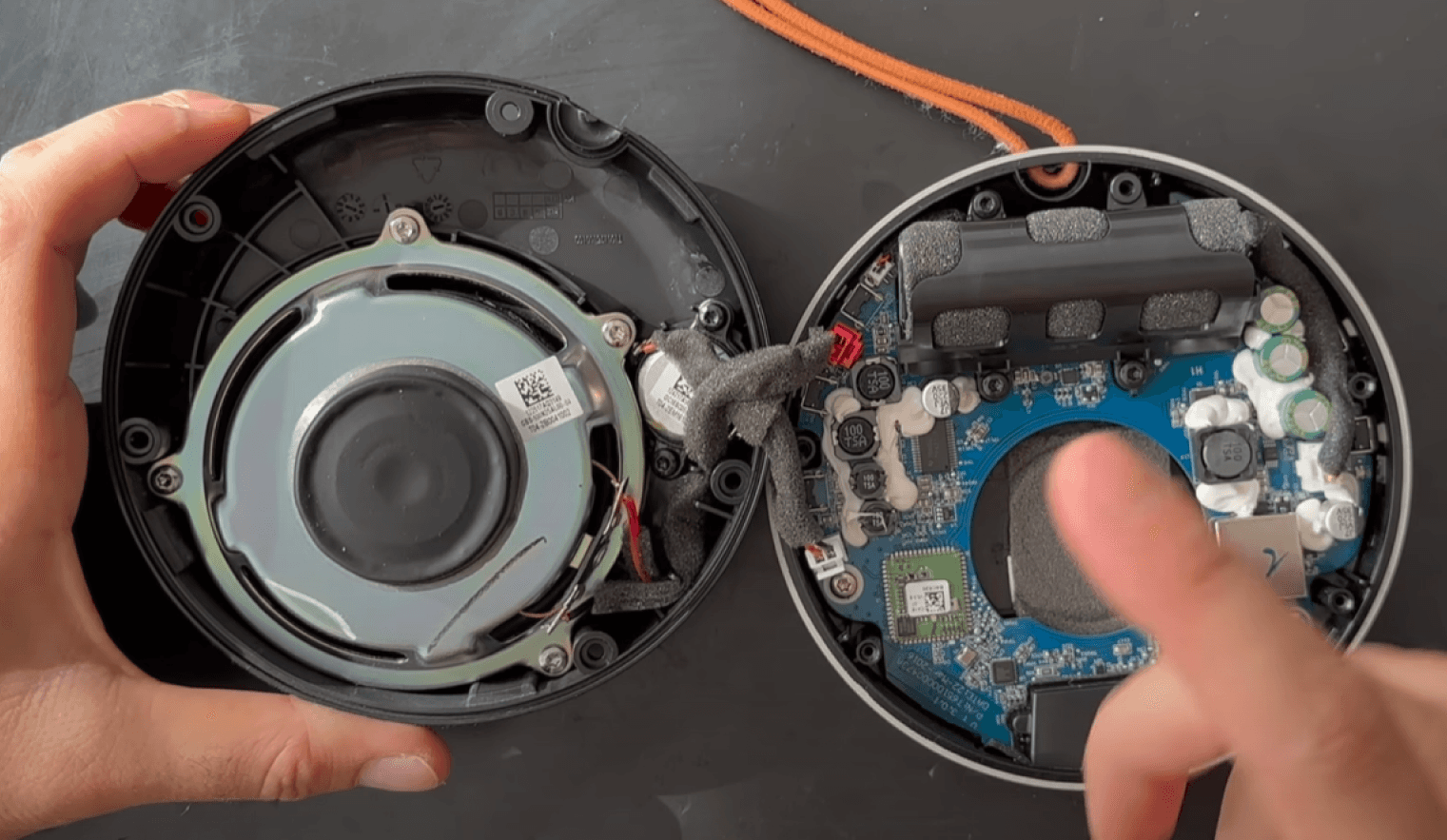
To ground the concept in reality, it was essential to understand how modern outdoor speakers function, what components they require, and how they are assembled. Reviewing existing product teardowns and conducting own autopsies proved crucial, building a solid understanding that enabled designing for manufacturing from an early stage.

Development

Within the project's limited timeframe, iterative feedback sessions supported the development, visualisation, and evaluation of concepts until the most promising one was selected for realisation.

See the process.

Motivation

The Nakamichi Mini Plus was my first real encounter with a truly delightful audio experience. Around Düsseldorf, many students began carrying this compact speaker, and my friend and I were among them. We shared music easily via Bluetooth and carried the speaker in our pockets. Asking someone to share a song became a simple way to show appreciation for their taste. That shared experience stayed with me and became the inspiration for this project.

Brief

Develop a new interpretation of the Nakamichi Mini Plus that is embracing the possibilities of current technology, recreates the user experience and feeling that I felt when I was small and to carry Nakamichi’s values and brand identity.

Nakamichi's History

An integral part to Nakamichi and its development within their brand identity is their history. In order to understand how they changed within their visual style and values, the company's development throughout the years needed to be examined. Nakamichi came to worldwide recognition during the era of cassettes and CD's between the 1970s to the 1990s. Towards the end of the 1990s, Nakamichi struggled with the shift into the digital era and the company got acquired by a holding, who redirected the brand's portfolio.

Changing Brand Identity

After Niro left and Nakamichi was acquired by another holding, the company shifted toward mass-market categories like speakers and earbuds. The portfolio changed not only in category but also visually, with recent products seemingly inspired by competitors such as JBL or Teenage Engineering. For this project, I adopt only the category shift while focusing on Nakamichi’s iconic 1970s–1990s identity and ignoring its current visual style, aiming for a concept grounded in technological relevance and historical legacy

Product Autopsies

To ground the concept in reality, it was essential to understand how modern outdoor speakers function, what components they require, and how they are assembled. Reviewing existing product teardowns and conducting own autopsies proved crucial, building a solid understanding that enabled designing for manufacturing from an early stage.

Development

Within the project's limited timeframe, iterative feedback sessions supported the development, visualisation, and evaluation of concepts until the most promising one was selected for realisation.

MS-01

MS-01

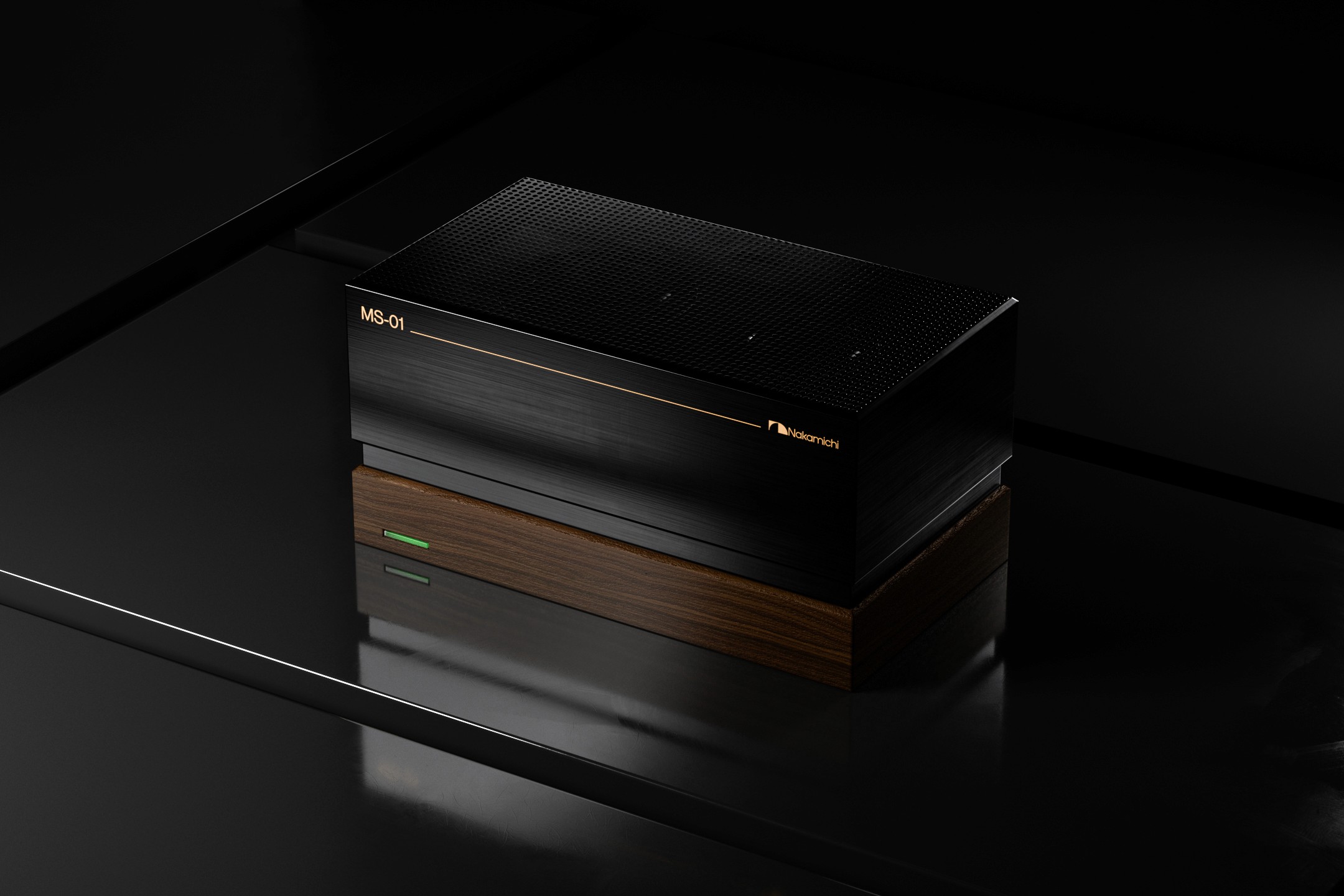
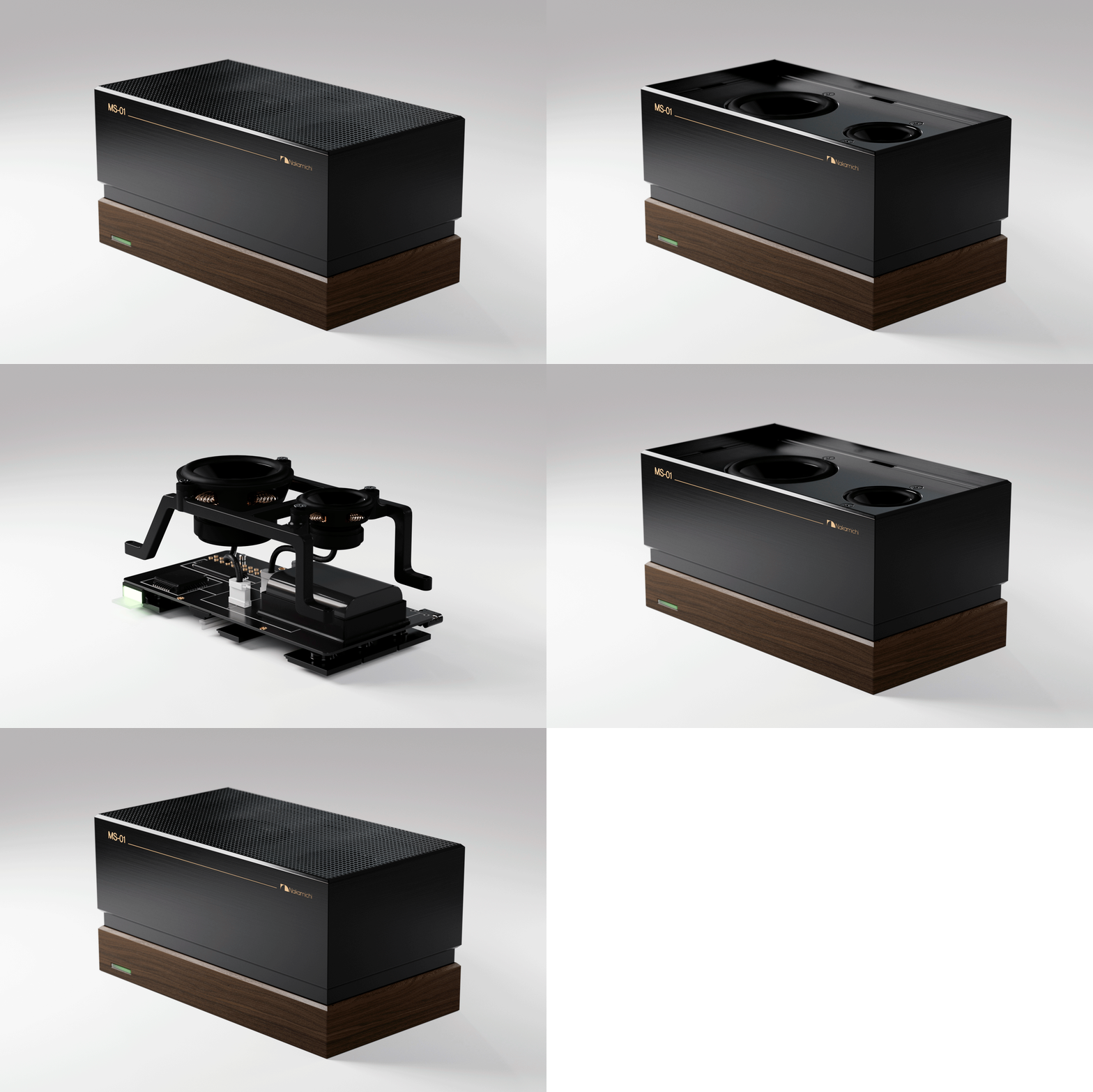
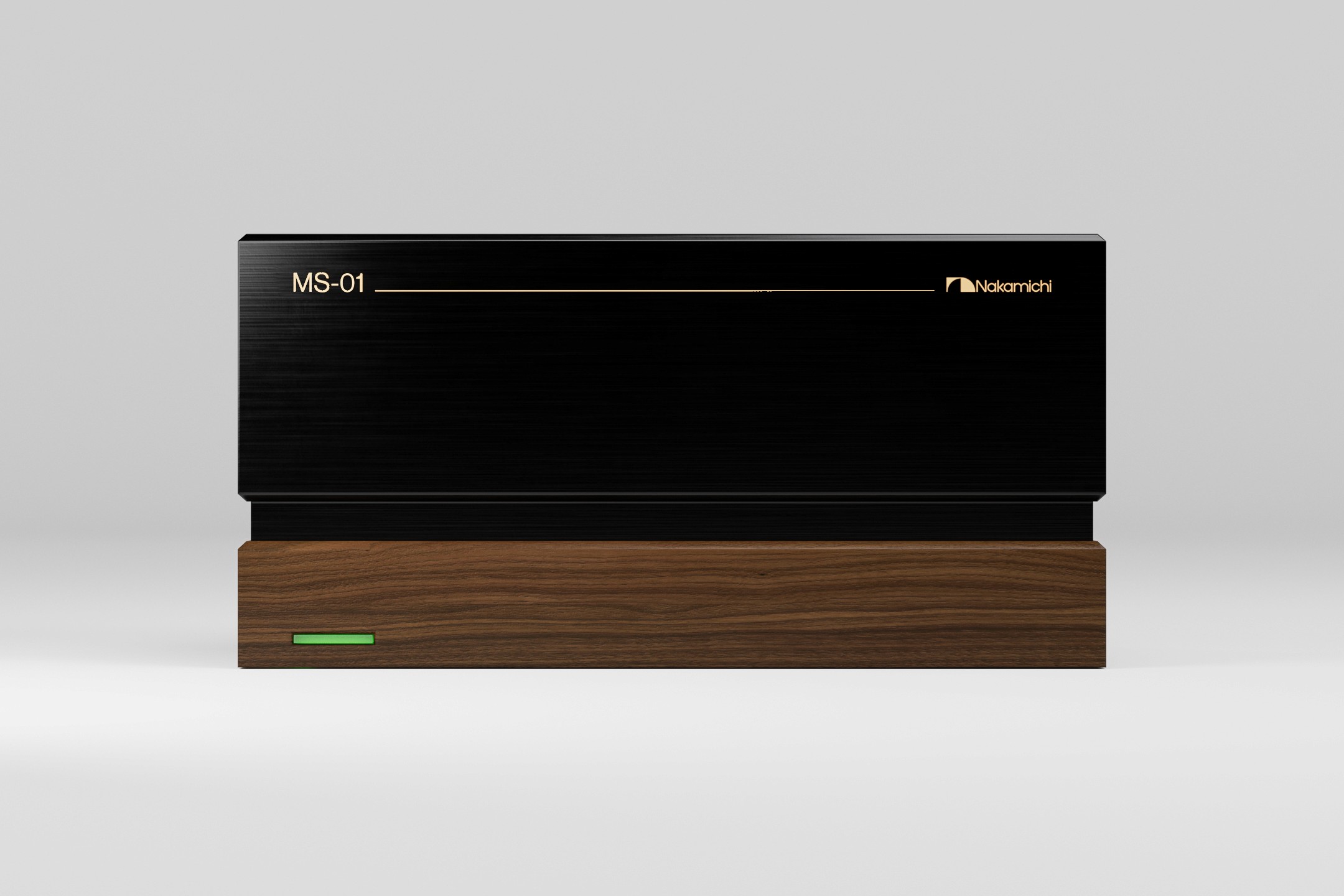
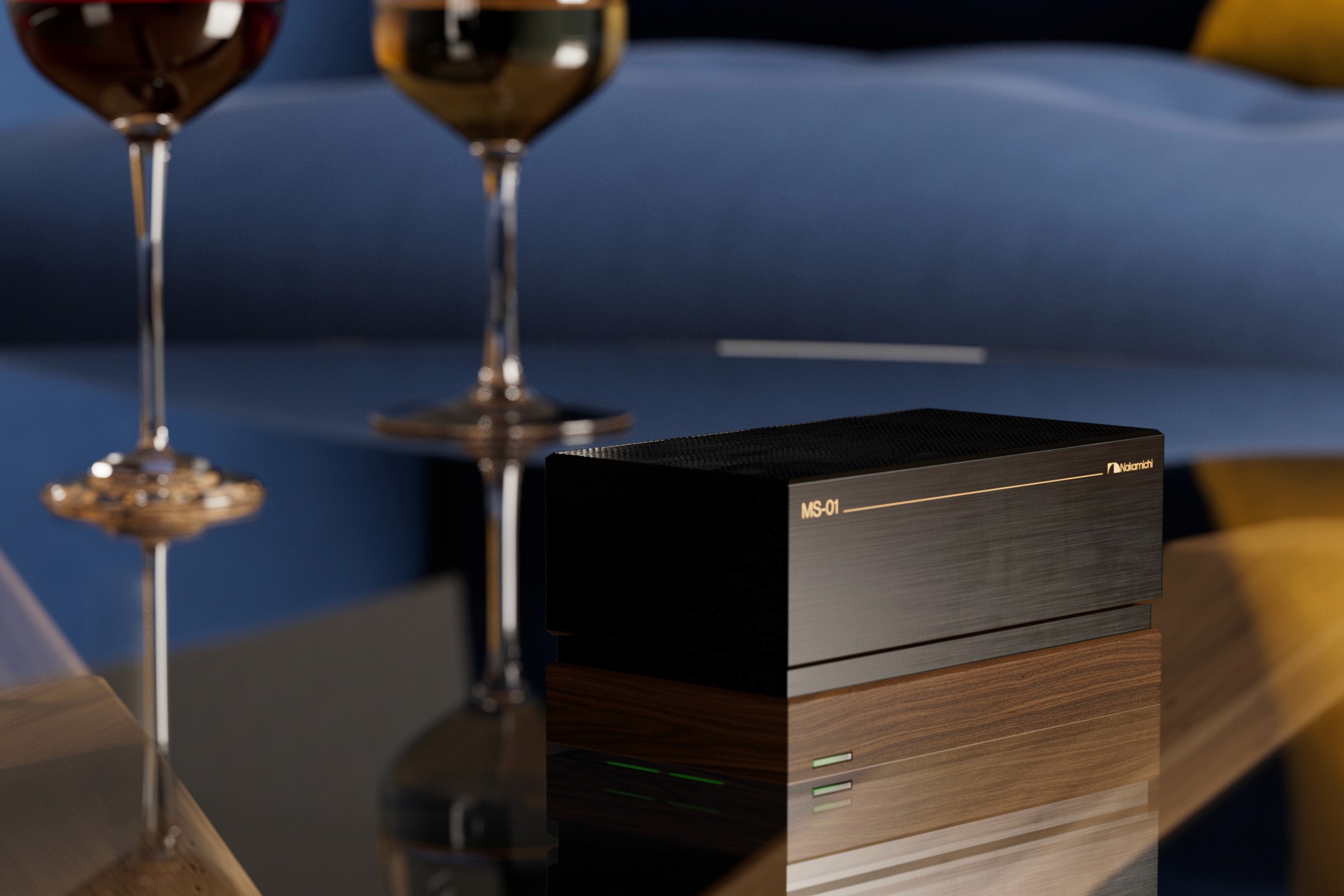
The Nakamichi MS-01 is a portable mini-speaker that is inspired by Nakamichi's most iconic products such as the Dragon or the RX-505. From the choice of materials and surface finishes to small details such as chamfers and radii, serious thought was put into every detail of the speaker's design with the aim of paying homage to the brands legacy, while applying it within the modern context of bluetooth speakers.

The Nakamichi MS-01 is a portable mini-speaker that is inspired by Nakamichi's most iconic products such as the Dragon or the RX-505. From the choice of materials and surface finishes to small details such as chamfers and radii, serious thought was put into every detail of the speaker's design with the aim of paying homage to the brands legacy, while applying it within the modern context of bluetooth speakers.

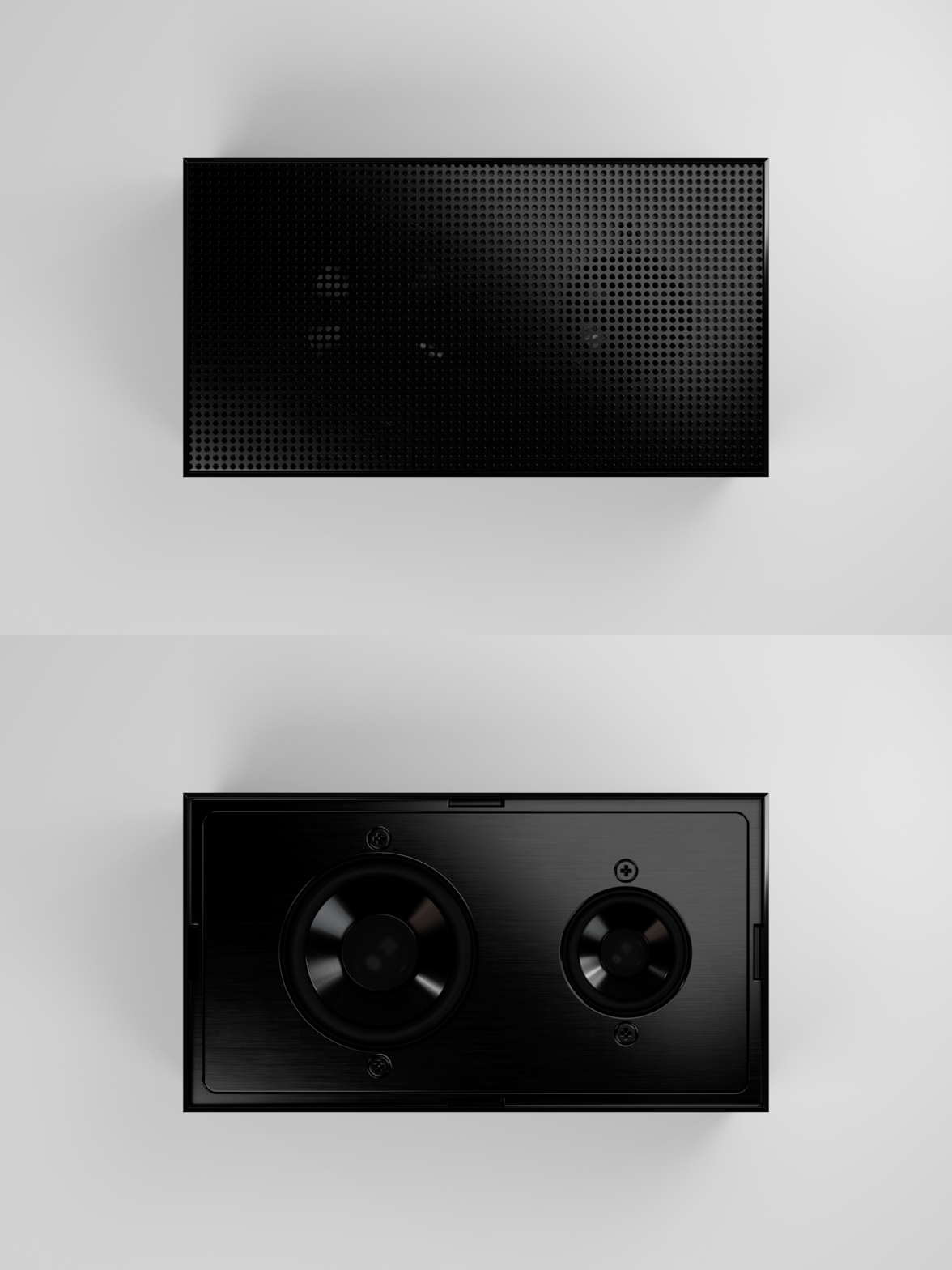
Aluminum Mesh - Perforated, Anodized, Black

Aluminum Mesh - Perforated, Anodized, Black

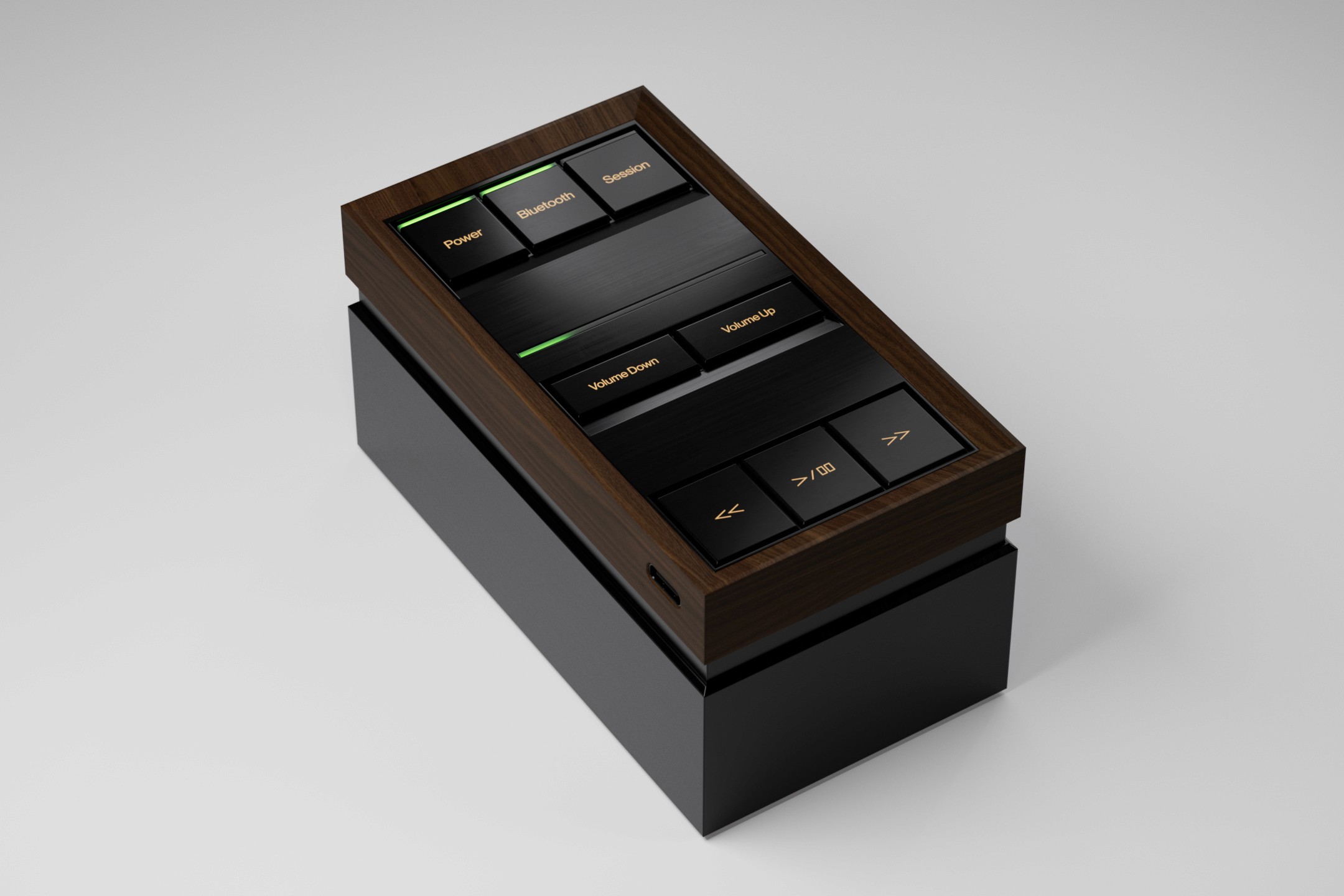
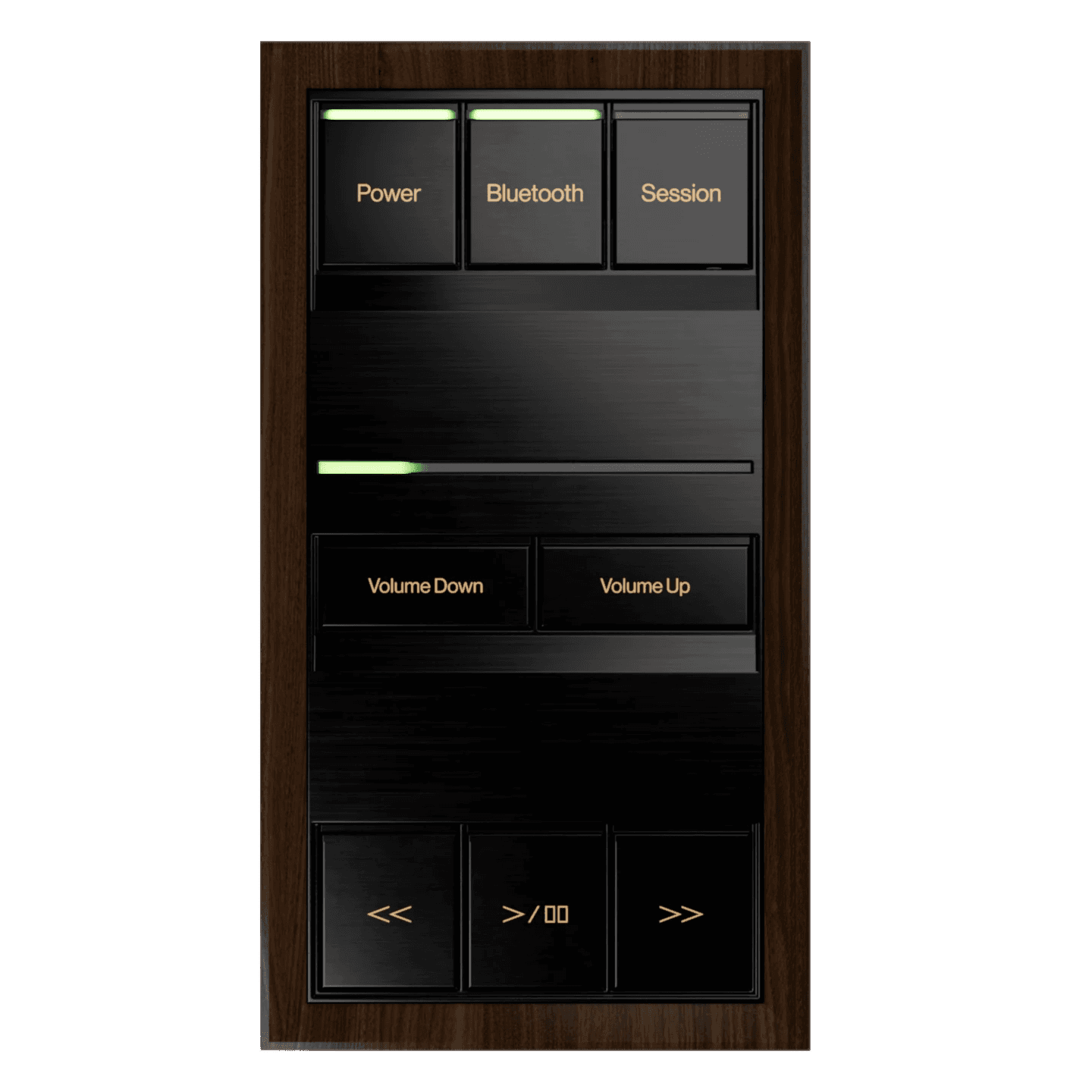
The speaker interface uses buttons inspired by iconic Nakamichi products from that era. Their size, materials, and tactile response are thoughtfully designed to make every press feel deliberate and satisfying. Subtle chamfers guide the finger into position, while haptic and acoustic feedback confirms each input. The indicator lights communicate the status of every setting at a glance. The button system moves away from today’s minimal, flat controls and reimagines tactility and physical feedback within modern devices.
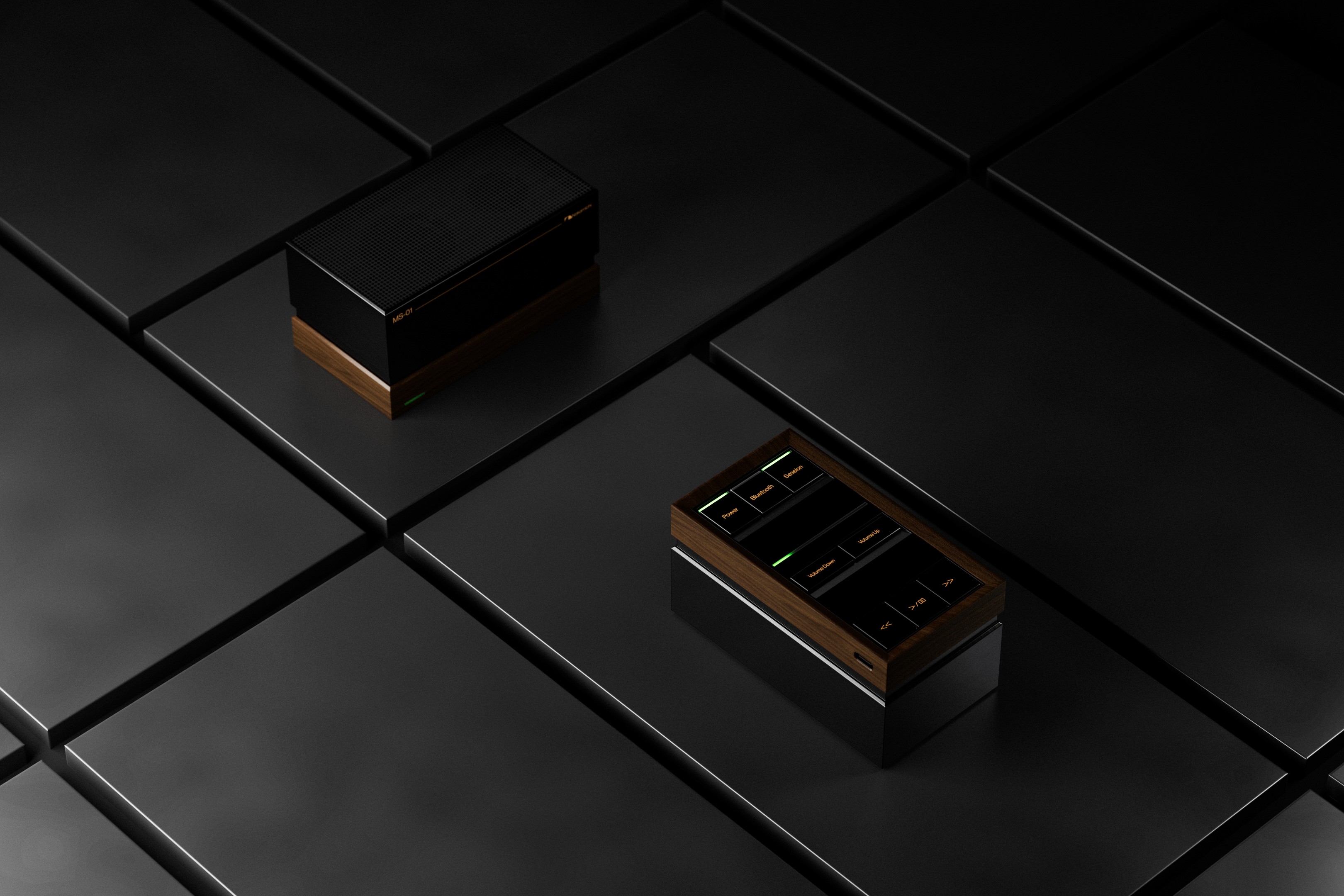
Session mode lets users instantly connect their speakers with a single tap and share their love for music. Once linked, the speakers shift into stereo mode, delivering a richer sound experience. This concept not only leverages the potential of modern audio technology, but also pays homage to a time when people bonded over sharing their favorite songs via Bluetooth. In the era of streaming, that shared listening experience was in need of thoughtful reinterpretation.
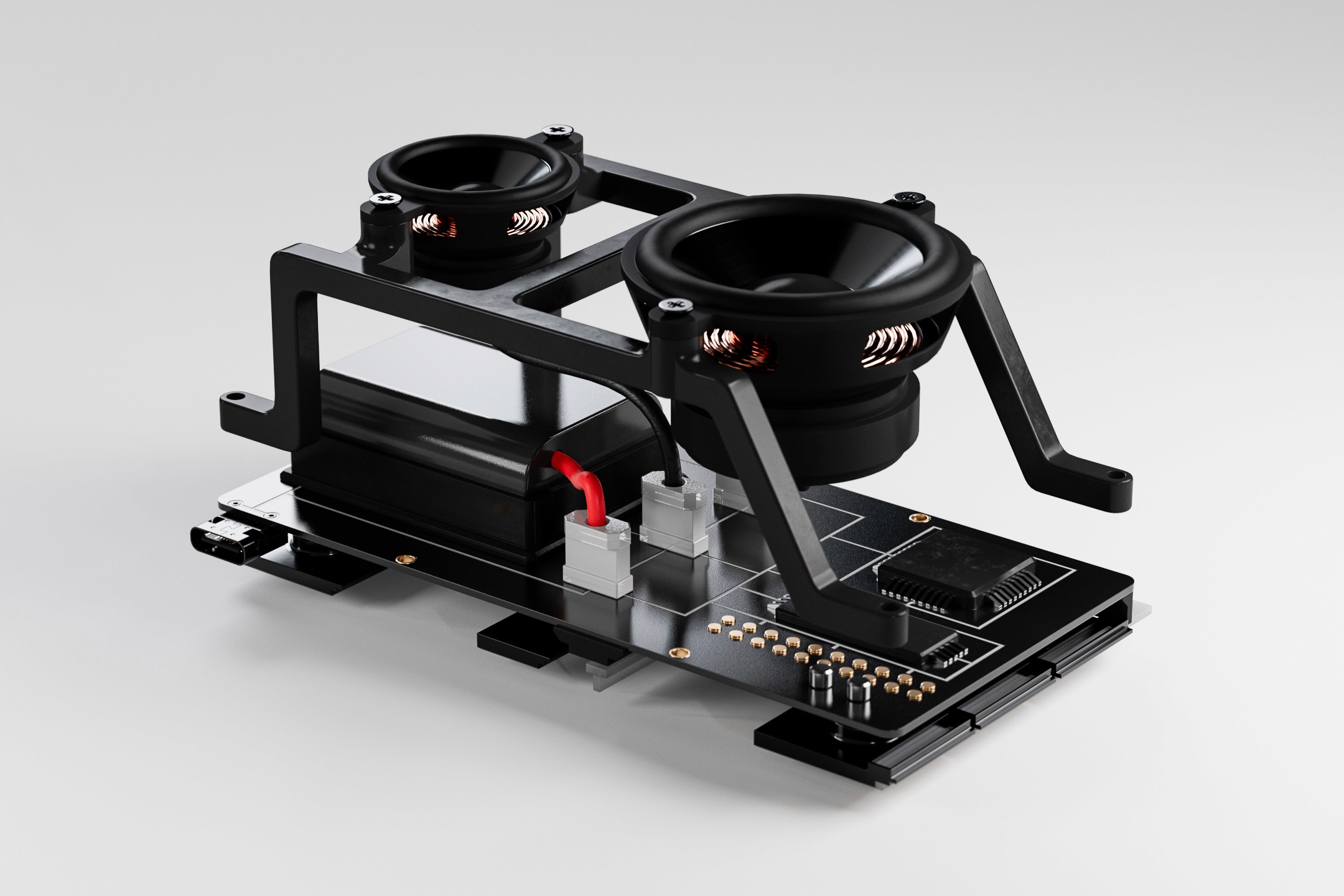
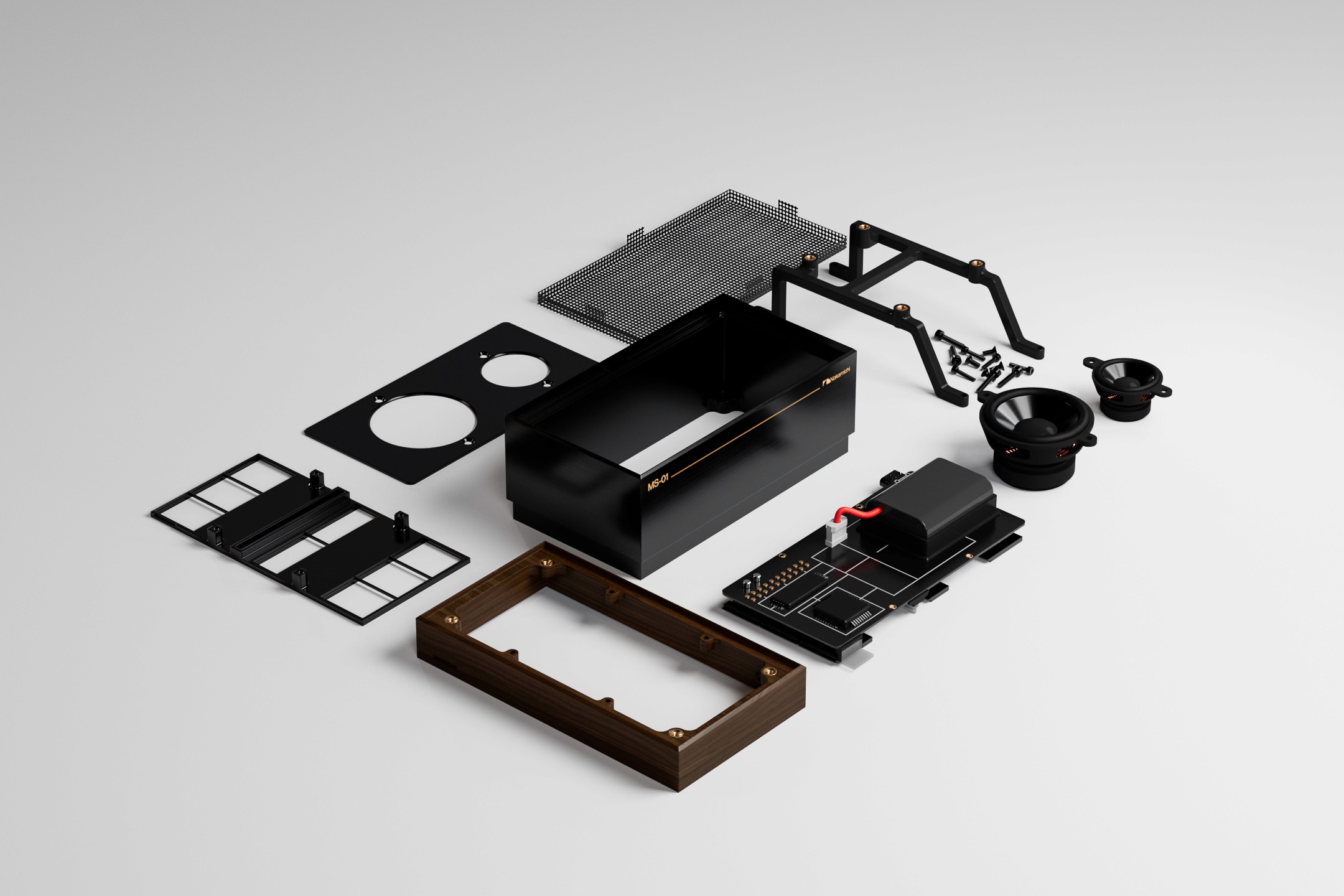
Design for manufacturing was central to this project. The main housing is extruded aluminum, CNC-machined, horizontally brushed, and black anodized. The lower section is CNC-machined Japanese walnut, finished with oil. The speaker grille uses perforated aluminum with circular apertures to complement the geometric form. The bottom frame and buttons are also anodized aluminum, aligning with the brands iconic identity.
Not in collaboration with Nakamichi. The brand was used for educational purposes only.

Not in collaboration with Nakamichi. The brand was used for educational purposes only.

© 2026 Yannik Engels

© 2026 Yannik Engels

Last update: July 24, 2026

Last update: July 24, 2026