Reefwatch
Modular Underwater ROV
Reefwatch
Modular Underwater ROV
2026
Lund University School of Industrial Design
Individual Project
8 Weeks
2026
Lund University School of Industrial Design
Individual Project
8 Weeks
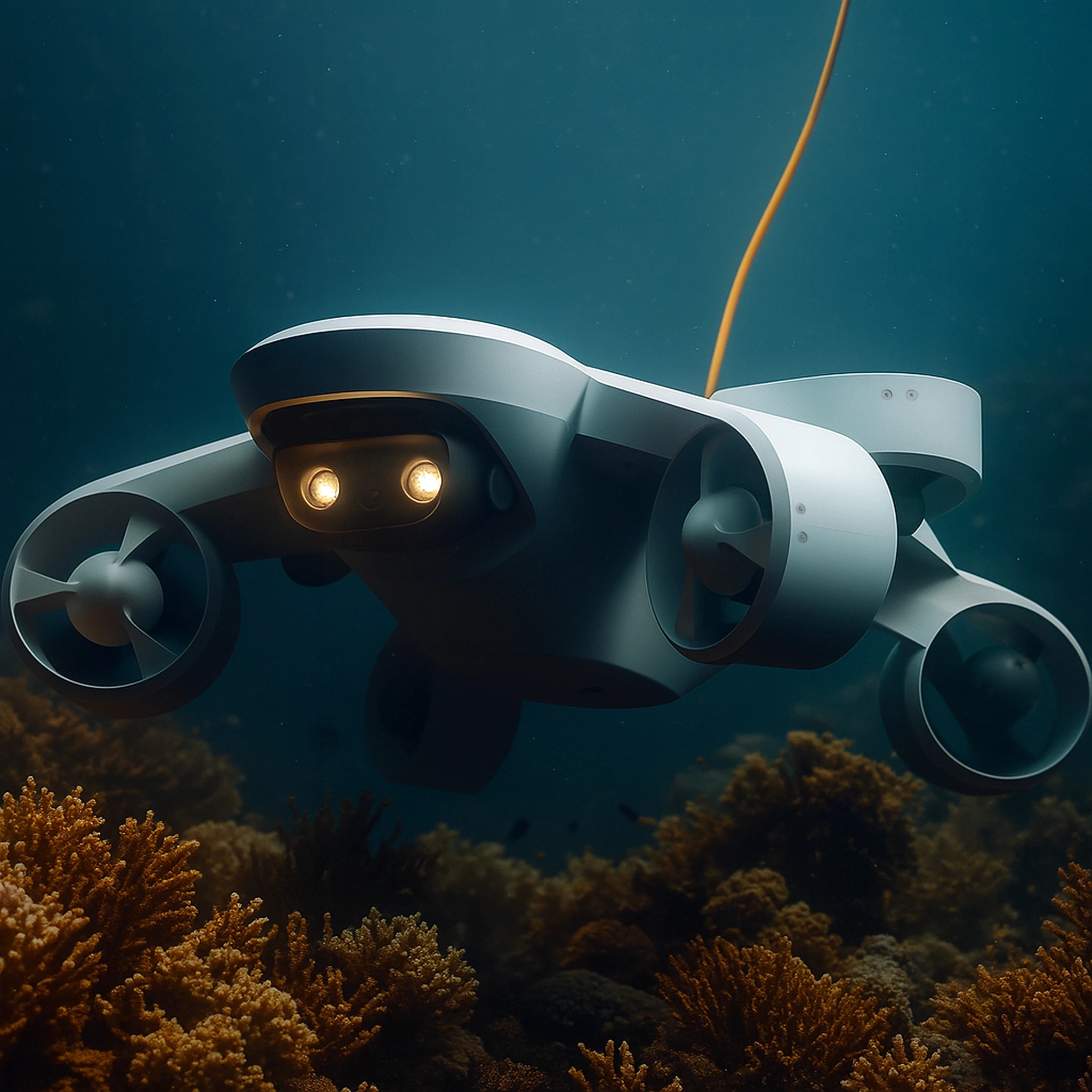
While aerial drones have become increasingly popular, the underwater space remains largely underserved, with most ROVs limited to DIY solutions. This project explores a modular underwater ROV designed for a broad range of maritime applications across both industrial and consumer markets.
While aerial drones have become increasingly popular, the underwater space remains largely underserved, with most ROVs limited to DIY solutions. This project explores a modular underwater ROV designed for a broad range of maritime applications across both industrial and consumer markets.
See the process.
A demand in Underwater Drones
The global underwater drone market is projected to grow from $4.9 billion in 2024 to $9.5 billion by 2030.
However, most existing models remain highly specialized, expensive, and difficult to maintain, highlighting the demand for accessible and versatile underwater ROVs.

Use Cases
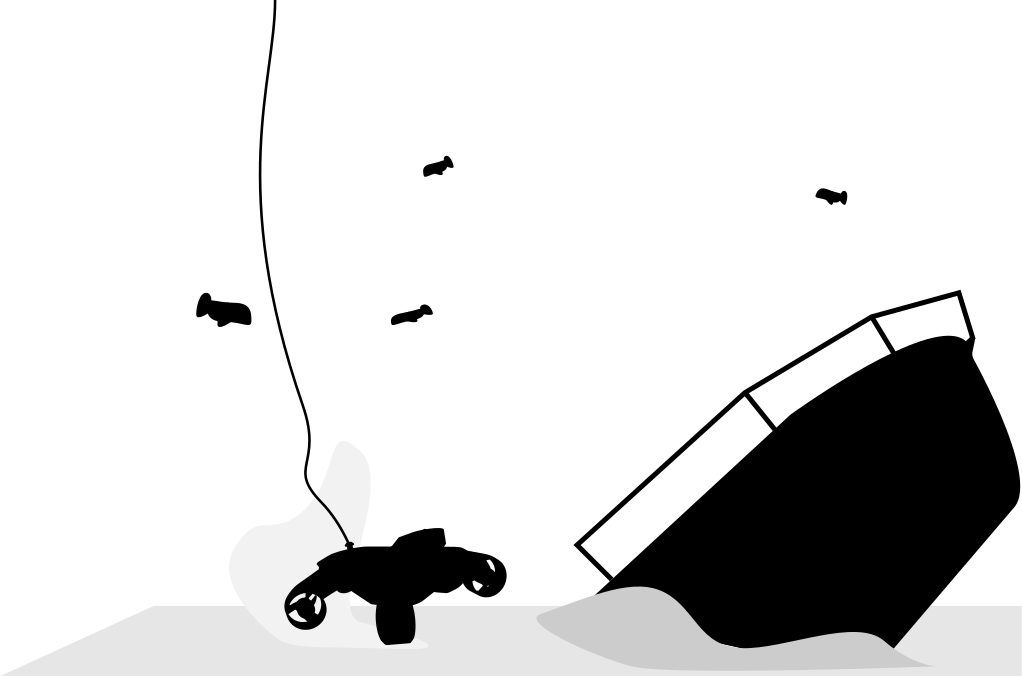
A reduced setup featuring either a camera or a LiDAR system can already enable a wide variety of use cases, making the ROV appealing to a broad audience. Even with minimal hardware, such a system can support tasks ranging from exploration to basic inspection.

Monitoring
with Camera:
Coral Reef Obvervation, Environmental Surveys
with LiDAR:
High-Resolution Reef Mapping, Habitat Analysis

Infrastructure
with Camera:
Hull Inspections, Infrastructure Monitoring
with LiDAR:
Engineering & Construction Support
Exploration
with Camera:
Underwater exploration, Archeology
with LiDAR:
Reconstruction of shipwrecks, Mapping
Thruster Layout
Selecting the thruster layout was key to the ROV’s performance. A 6-thruster setup with 2 vertical and 4 vectored thrusters was chosen, enabling omnidirectional movement, smooth rotation, and a more balanced, energy-efficient operation.

Development
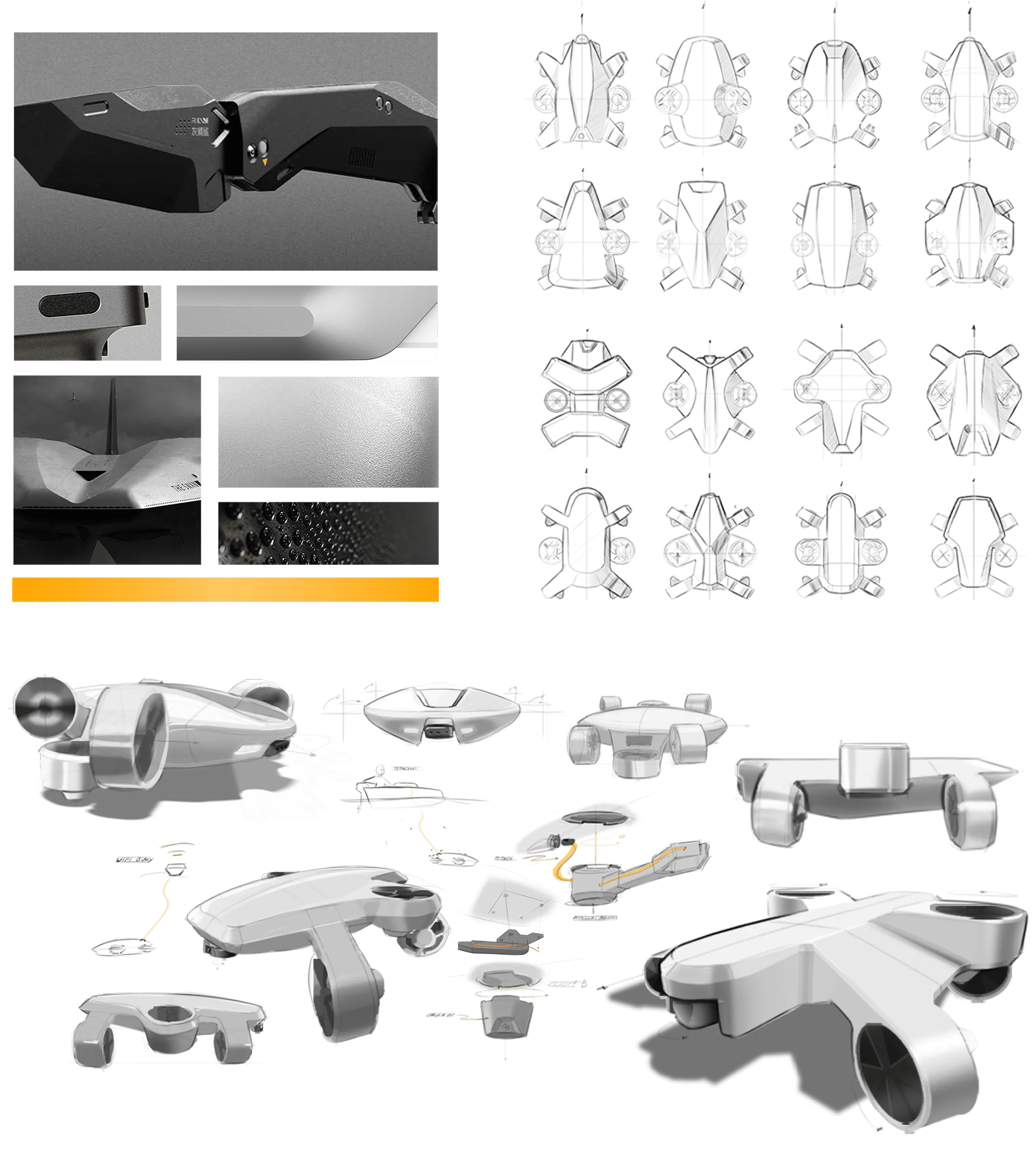
Through feedback sessions with engineers and fellow designers, I explored various options for CMF, form, and function. My goal was to create both a functional and simple design language that blends simple geometry with complex surfaces where it adds value.
See the process.
A demand in Underwater Drones
The global underwater drone market is projected to grow from $4.9 billion in 2024 to $9.5 billion by 2030.
However, most existing models remain highly specialized, expensive, and difficult to maintain, highlighting the demand for accessible and versatile underwater ROVs.
Use Cases
A reduced setup featuring either a camera or a LiDAR system can already enable a wide variety of use cases, making the ROV appealing to a broad audience. Even with minimal hardware, such a system can support tasks ranging from exploration to basic inspection.
Monitoring
with Camera:
Coral Reef Obvervation, Environmental Surveys
with LiDAR:
High-Resolution Reef Mapping, Habitat Analysis
Infrastructure
with Camera:
Hull Inspections, Infrastructure Monitoring
with LiDAR:
Engineering & Construction Support
Exploration
with Camera:
Underwater exploration, Archeology
with LiDAR:
Reconstruction of shipwrecks, Mapping
Thruster Layout
Selecting the thruster layout was key to the ROV’s performance. A 6-thruster setup with 2 vertical and 4 vectored thrusters was chosen, enabling omnidirectional movement, smooth rotation, and a more balanced, energy-efficient operation.
Development
Through feedback sessions with engineers and fellow designers, I explored various options for CMF, form, and function. My goal was to create both a functional and simple design language that blends simple geometry with complex surfaces where it adds value.
See the process.
A demand in Underwater Drones
The global underwater drone market is projected to grow from $4.9 billion in 2024 to $9.5 billion by 2030.
However, most existing models remain highly specialized, expensive, and difficult to maintain, highlighting the demand for accessible and versatile underwater ROVs.
Use Cases
A reduced setup featuring either a camera or a LiDAR system can already enable a wide variety of use cases, making the ROV appealing to a broad audience. Even with minimal hardware, such a system can support tasks ranging from exploration to basic inspection.
Monitoring
with Camera:
Coral Reef Obvervation, Environmental Surveys
with LiDAR:
High-Resolution Reef Mapping, Habitat Analysis
Infrastructure
with Camera:
Hull Inspections, Infrastructure Monitoring
with LiDAR:
Engineering & Construction Support
Exploration
with Camera:
Underwater exploration, Archeology
with LiDAR:
Reconstruction of shipwrecks, Mapping
Thruster Layout
Selecting the thruster layout was key to the ROV’s performance. A 6-thruster setup with 2 vertical and 4 vectored thrusters was chosen, enabling omnidirectional movement, smooth rotation, and a more balanced, energy-efficient operation.
Development
Through feedback sessions with engineers and fellow designers, I explored various options for CMF, form, and function. My goal was to create both a functional and simple design language that blends simple geometry with complex surfaces where it adds value.

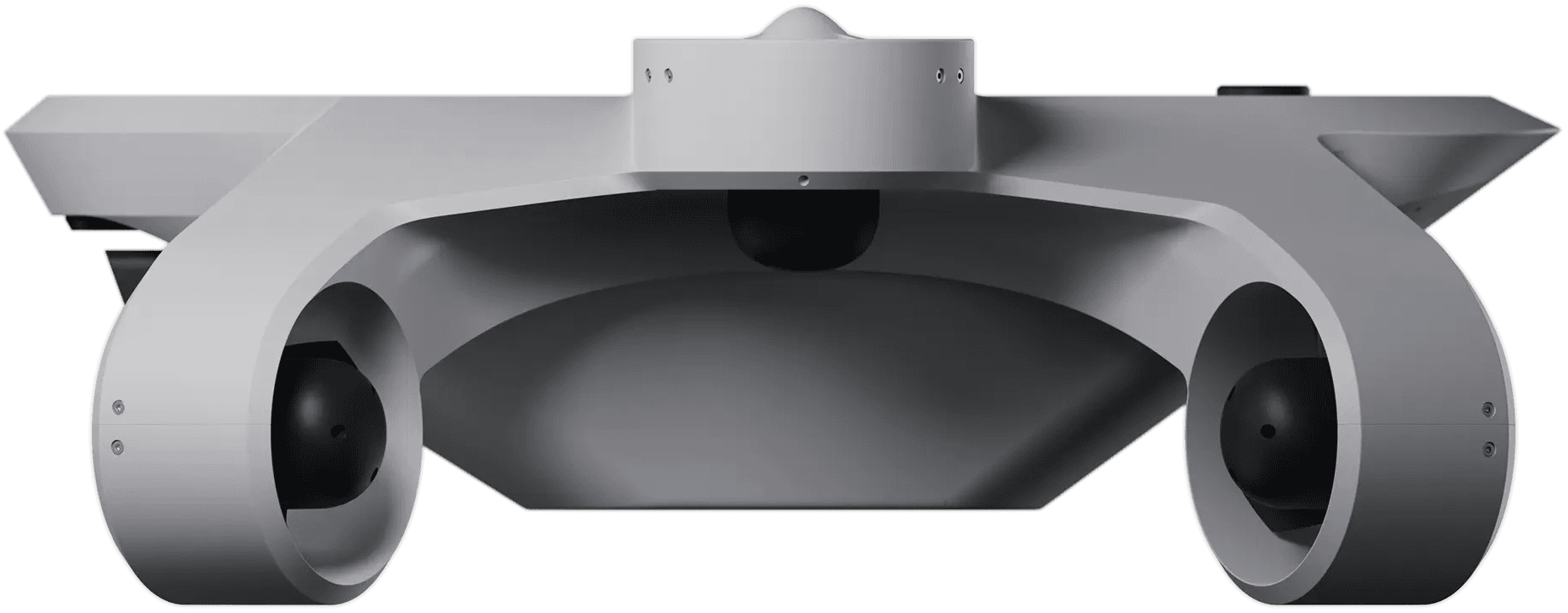
ROV-001
ROV-001
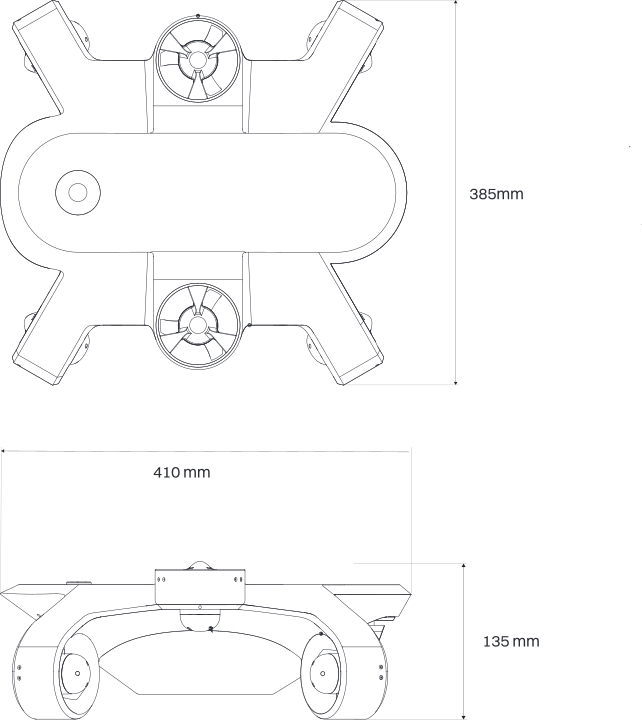
ROV-001 is a modular underwater ROV that embodies accessibility, functionality, and simplicity. Its form reflects these values through a blend of simple geometric shapes, functional complex surfaces where needed, and a clean, unobtrusive CMF that meets the demands of each user scenario.
ROV-001 is a modular underwater ROV that embodies accessibility, functionality, and simplicity. Its form reflects these values through a blend of simple geometric shapes, functional complex surfaces where needed, and a clean, unobtrusive CMF that meets the demands of each user scenario.


Tether Connection
Tether Connection
A waterproof fiber-optic tether provides high-speed, low-latency communication for full control of the ROV’s navigation, camera, and LiDAR systems. Available in lengths from 30 to 200 meters, the tether connects quickly via a simple locking mechanism, enabling operation from a boat or shore.
A waterproof fiber-optic tether provides high-speed, low-latency communication for full control of the ROV’s navigation, camera, and LiDAR systems. Available in lengths from 30 to 200 meters, the tether connects quickly via a simple locking mechanism, enabling operation from a boat or shore.

Camera Module
Camera Module
The camera module mounts with four screws to a fully sealed housing. Its single-axis design enables smooth camera rotation without repositioning the ROV. Integrated high-power LEDs provide consistent illumination for the 4K camera, supporting applications such as marine exploration, coral reef mapping, and underwater infrastructure inspection.
The camera module mounts with four screws to a fully sealed housing. Its single-axis design enables smooth camera rotation without repositioning the ROV. Integrated high-power LEDs provide consistent illumination for the 4K camera, supporting applications such as marine exploration, coral reef mapping, and underwater infrastructure inspection.

LiDAR Module
LiDAR Module
The LiDAR module uses the same quick-mount system as the camera, allowing fast module swaps while enhancing the ROV’s modularity. By emitting laser pulses and measuring their return time, it generates precise 3D maps for applications such as shipwreck reconstruction and underwater infrastructure inspection.
The LiDAR module uses the same quick-mount system as the camera, allowing fast module swaps while enhancing the ROV’s modularity. By emitting laser pulses and measuring their return time, it generates precise 3D maps for applications such as shipwreck reconstruction and underwater infrastructure inspection.


Repairability
Repairability was a key consideration in this conceptual design, aiming to enhance user experience and reflect sustainability goals, such as those in the EU’s Right to Repair Directive (Directive (EU) 2024/1799). Focus was placed on the thrusters as the most vulnerable components. A simple six-screw waterproof assembly was proposed to allow easy repairs while exposing only sealed cables and components.

Neutral Grey
Neutral Grey
The neutral grey variant is designed for everyday users who value a clean, understated aesthetic. Its subtle finish blends into a variety of environments, making it well suited for recreational use, research, and general underwater inspection.
The neutral grey variant is designed for everyday users who value a clean, understated aesthetic. Its subtle finish blends into a variety of environments, making it well suited for recreational use, research, and general underwater inspection.
Primary
Primary
Colour: Pantone 427 C
Material: ABS
Finish: VDI 3400-24
Secondary
Secondary
Colour: Pantone 446 C
Material: ABS
Finish: VDI 3400-24
Signal Orange
Signal Orange
The bright orange variant uses a high-visibility signal color specifically selected for underwater visibility. Its finish remains easy to spot in murky or turbulent waters, improving safety and situational awareness. It is suited for demanding applications such as search and rescue, infrastructure inspection, and other professional operations where visual tracking is critical.
The bright orange variant uses a high-visibility signal color specifically selected for underwater visibility. Its finish remains easy to spot in murky or turbulent waters, improving safety and situational awareness. It is suited for demanding applications such as search and rescue, infrastructure inspection, and other professional operations where visual tracking is critical.
Primary
Primary
Colour: Pantone 1595 C
Material: ABS
Finish: VDI 3400-24
Secondary
Secondary
Colour: Pantone 446 C
Material: ABS
Finish: VDI 3400-24